
SCOTUS rules on nearly $2 billion in frozen USAID payments

Demonstrators and lawmakers rally against President Donald Trump and Elon Musk's actions, including dismantling the U.S. Agency for International Development, on Capitol Hill in Washington. (AP Photo/J. Scott Applewhite
"Does one district-court judge, who probably is without jurisdiction, have unbridled authority to force the United States Government to disburse (and likely irrevocably lose) 2 billion taxpayers' dollars? The answer ought to be an unequivocal 'No,' yet a majority of this Court obviously believes otherwise," Alito penned. "I am amazed."
Chief Justice John Roberts had consented last Wednesday to hold in abeyance a lower court's ruling that obligated the Trump administration to pay by 11:59 p.m. all foreign aid bills that are outstanding, a sum amounting to about $1.9 billion – a deadline that the Justice Department had claimed was "impossible" to meet. Roberts did not provide a reason for consenting to suspend the order made by U.S. District Judge Amir Ali, who was appointed by Biden, despite the chief justice having broadly been anticipated to send the case back to the full court for hearing. Significantly, the stay avoided foreign aid organizations from moving a motion of civil contempt against the Trump administration— a procedural move that staff members from the impacted groups stated in interviews this week would have accelerated their procedure to recover the unpaid debt.
At stake is how soon the Trump administration must reimburse the nearly $2 billion owed to aid organizations and contractors for work already completed on projects financed by the U.S. Agency for International Development (USAID), while the administration has just put a global hold on all spending abroad in the interests of government "efficiency" and a reduction of waste.
In a Monday court filing, Acting U.S. Solicitor General Sarah Harris stated that although the plaintiffs' claims were probably "legitimate," the amount of time U.S. District Judge Amir Ali provided them to pay the outstanding bills was "not logistically or technically feasible."
Harris also contended Monday that the order might be an executive branch overreach of powers vested in the Constitution to an elected president.
Directing the Trump administration to make payments on a schedule of the lower court's discretion, and "without regard to whether the requests are legitimate, or even due yet," Harris said, "intrudes on the president's foreign affairs powers" and executive branch authority when it comes to dispersing foreign aid.
HERE'S WHY DOZENS OF LAWSUITS SEEKING TO QUASH TRUMP'S EARLY ACTIONS AS PRESIDENT ARE FAILING
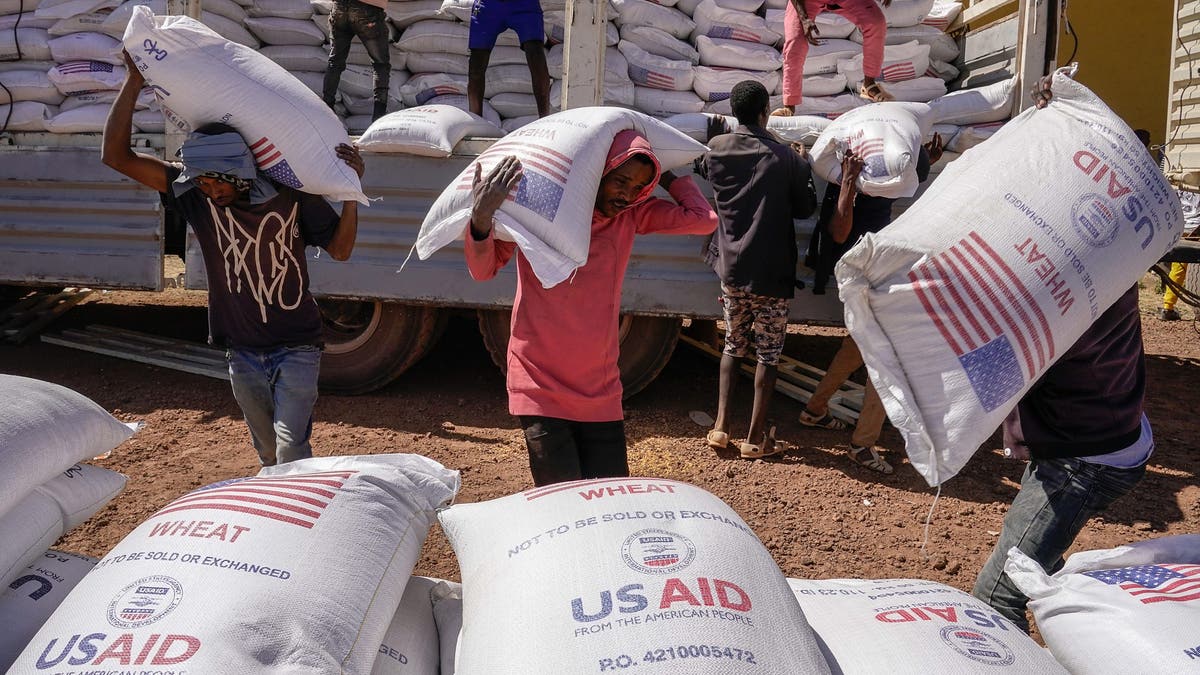
Volunteers at the Zanzalima Camp for Internally Displaced People unload 50 kilogram saks of Wheat flour that were a part of an aid delivery from USAID in Bahir Dar, Ethiopia. USAID started delivering food aid to the camp in September 2021. (J. Countess/Getty Images)
Plaintiffs themselves dismissed that interpretation in its entirety. They protested in their own Supreme Court filing that the judge on the lower court had already instructed the Trump administration over two weeks ago to start issuing the foreign aid payments owed – something they alleged the government simply never got around to doing, or even to taking steps towards doing – meaning the administration was never going to do anything about carrying out that demand.
The Trump administration "never made any moves towards compliance" with Judge Ali's ruling to unthaw the federal funds so that they could make the $1.9 billion in delayed project payments, lawyers for the plaintiffs contended in their own Supreme Court brief.
They also dismissed the administration's contention in court a week ago that it would take "several weeks" to revive the payment system.
Instead, they argued, the Trump administration rushed too quickly to dismantle the apparatus needed to make payments to foreign aid recipients in the first place— and to eliminate the many USAID staff who might have helped facilitate a quicker, smoother repayment process.
"All of these invoices have previously been approved by the front-line managers at USAID, and it's really these payment delays that the government has itself created" that are to blame for the repayment issues, one source familiar with the USAID payments and contractors impacted explained to Fox News Digital in an interview.
LAWSUIT TRACKER: NEW RESISTANCE FIGHTING TRUMP'S SECOND TERM THROUGH ASSAULT OF LAWSUITS TARGETING EOS
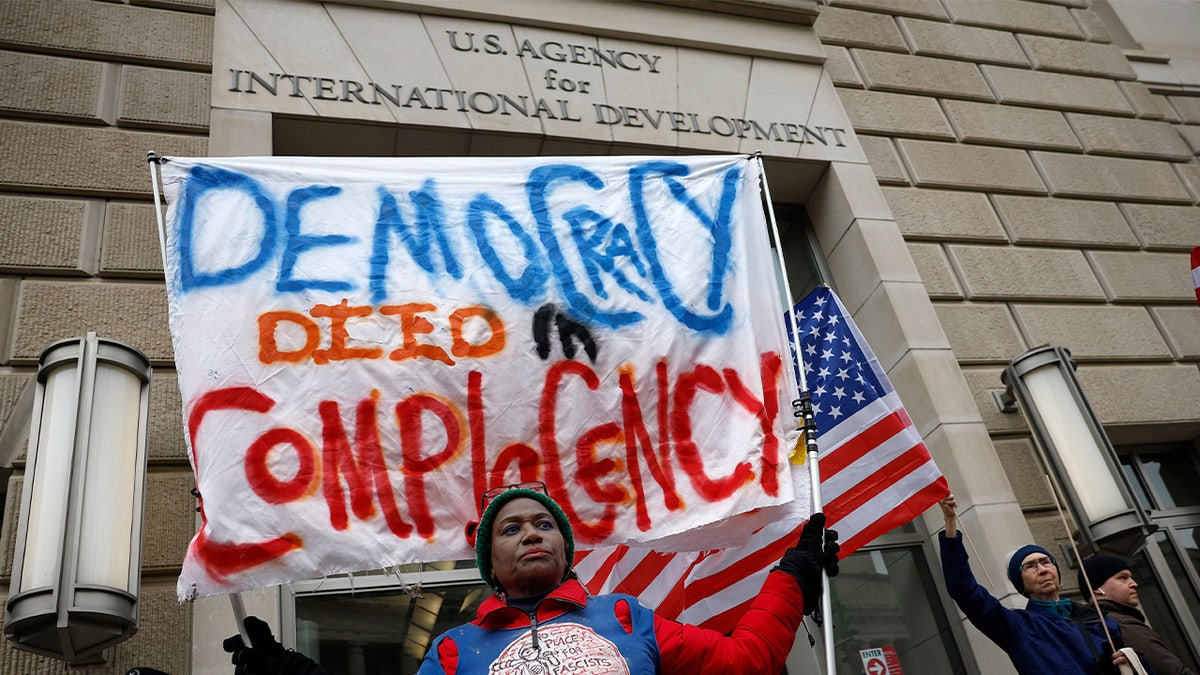
Employees and supporters gather to protest outside of the U.S. Agency for International Development (USAID) headquarters on February 03, 2025. (Kevin Dietsch/Getty Images)
The high court lawsuit follows as most of the foreign aid organizations who brought suit against the administration this past spring have already lost the majority of their funding. This is in keeping with President Donald Trump's announced intentions to reduce some 90% of USAID foreign aid contracts, and to cut an additional $60 billion in foreign aid expenditures.
The White House has yet to issue a report of what contracts and grants were on the chopping block to be cut, and what would continue. Critics, however, have complained that the sudden U.S. investment and presence withdrawal worldwide poses a threat to economic damage, reputation, and fresh security threats at home and abroad.
Scott Greytak, a group director at U.S. Transparency International, stated that slashing so much of U.S. foreign aid has major economic and security implications. The reduction of U.S. funding for specific projects, particularly in those countries with higher risks of corruption, would "open the door to greater cross-border corruption, fraud, and other crimes," he said.
This would provide new challenges to U.S. companies looking to enter or expand in foreign markets, according to Greytak, whose organization has active chapters in over 100 nations worldwide, and would be "an invitation for U.S. competitors, particularly China, to move in and fill the void left by the lack of U.S. participation."