
Bodies of Gene Hackman, wife Betsy Arakawa Hackman discovered at their Santa Fe, New Mexico, home on Feb. 26
SANTA FE, N.M. — Legendary actor Gene Hackman has passed away due to hypertensive atherosclerotic cardiovascular disease, with Alzheimer’s disease as a contributing factor, according to New Mexico officials. Reports confirm that Hackman was likely alone at home for about a week before his death on February 18, the last recorded activity from his pacemaker.
In a tragic turn, his wife, Betsy Arakawa Hackman, died just days earlier from Hantavirus Pulmonary Syndrome, a rare but serious disease transmitted from rodents to humans, as confirmed by the New Mexico Department of Health. Her autopsy ruled the manner of death as natural, with authorities estimating she passed away around February 11.
According to Chief Medical Investigator Dr. Heather Jarrell, a full autopsy on Hackman revealed severe heart disease, multiple past heart surgeries, prior heart attacks, and chronic high blood pressure that significantly impacted his kidneys.

Gene Hackman and Betsy Arakawa were both found dead in their Santa Fe, New Mexico, home on Feb. 26. (Ron Galella/Ron Galella Collection via Getty Images)
Dr. Heather Jarrell, Chief Medical Investigator, stated that an examination of Gene Hackman’s brain revealed advanced Alzheimer’s disease along with blood vessel changes caused by chronic high blood pressure.
Further analysis of Hackman’s pacemaker data on February 18 showed an abnormal heart rhythm (atrial fibrillation), supporting the conclusion that he likely passed away on that date. Investigators believe his wife, Betsy Arakawa Hackman, died first, with February 11 being the last confirmed date she was alive.
"Based on the circumstances, it is reasonable to conclude that [Arakawa] passed away first," Jarrell stated, as detectives work to establish a clear timeline of events leading to the couple’s tragic deaths.
Authorities are now piecing together the timeline of their final days, working backward to understand how Hackman spent his last week alone following his wife’s passing. The investigation suggests that after Arakawa’s death, Hackman—who suffered from severe heart disease—may have experienced increasing health complications before ultimately succumbing to cardiovascular failure.
Officials continue to examine medical records, pacemaker data, and autopsy findings to confirm the exact sequence of events, ensuring a thorough understanding of the circumstances surrounding their deaths.
Investigators determined that Betsy Arakawa Hackman was last seen in public on February 11, after running errands in the local community. According to Sheriff Adan Mendoza, she visited a veterinary clinic on February 9 and was later spotted at a grocery store, pharmacy, and pet store on February 11. She returned home to the couple’s gated community at approximately 5:15 p.m., marking the last time she was known to be alive.
When asked whether Gene Hackman could have survived alone following his wife’s death, Dr. Heather Jarrell noted that the Oscar-winning actor was in a very poor state of health.
"Based on the circumstances, it is reasonable to conclude that Miss Hackman passed away first, with February 11 being the last time that she was known to be alive," Jarrell stated.
She further explained that Hackman suffered from advanced Alzheimer’s disease and severe heart disease, which significantly impacted his ability to function independently.
"I'm not aware of what his normal daily functioning capability was," she added. "He was in a very poor state of health, and he had significant heart disease. And I think ultimately that is what resulted in his death."
Investigators continue to piece together the final days of the couple’s lives, examining medical records and surveillance footage to confirm the timeline.
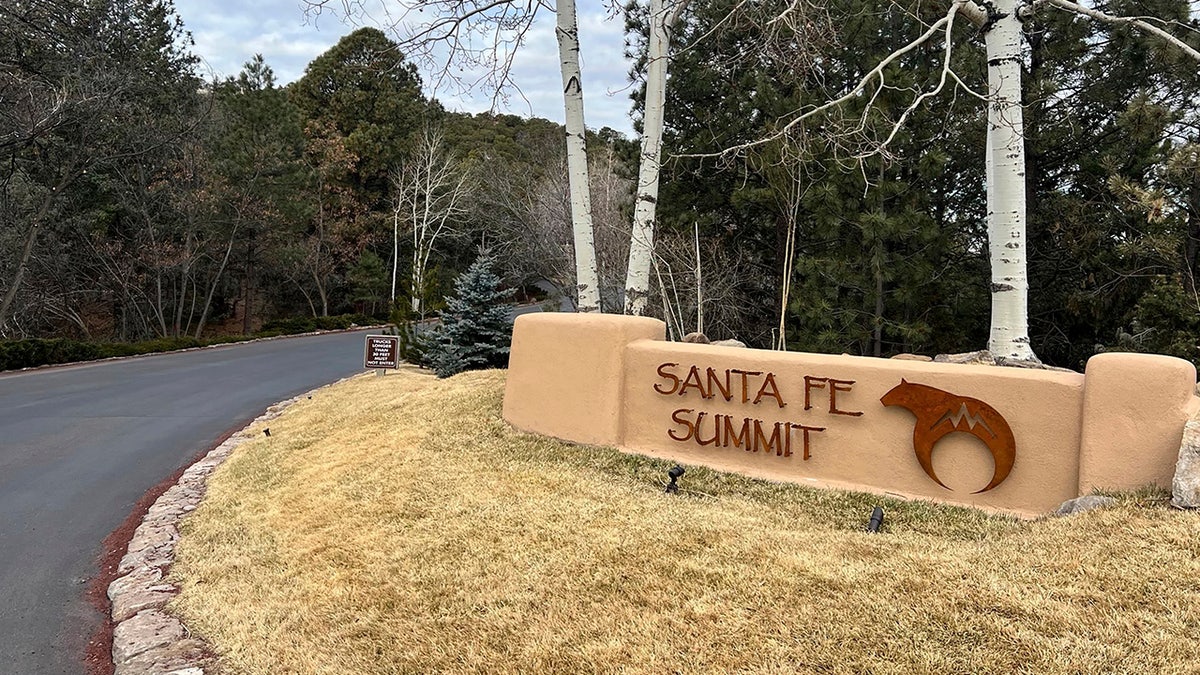
The entrance to the gated community where actor Gene Hackman, his wife Betsy Arakawa and their dog were found dead in their home in Santa Fe, New Mexico, is shown on Feb. 27. (AP Photo/Roberto Rosales)
Dr. Heather Jarrell noted that there was no evidence of dehydration during Gene Hackman’s autopsy, though she did find poor kidney function, likely due to chronic high blood pressure. Additionally, his stomach was empty, indicating that he had not eaten recently before his death.
"He was in an advanced state of Alzheimer's, and it's quite possible that he was not aware that she was deceased," Jarrell stated, suggesting that Hackman may not have fully comprehended his wife's passing.
Gene Hackman’s Vehicles Could Hold Clues to His Final Days
As investigators continue working to pinpoint Hackman’s exact time of death, some experts believe his vehicles could offer critical clues. According to a former investigator, analyzing their usage and movement patterns could help determine when he last left the house.
Jarrell also provided insight into hantavirus, the rare and deadly disease that led to Betsy Arakawa Hackman’s death. She explained that hantavirus pulmonary syndrome starts with flu-like symptoms, including fever, muscle aches, and cough, which can escalate to vomiting, diarrhea, lung failure, and heart failure.
"This occurs after a one- to eight-week exposure to rodent excrement, primarily from a specific mouse species known to carry hantavirus," she said. Unlike some viruses, hantavirus in the U.S. is not transmissible between humans, meaning it can only spread from animals to people.
Authorities continue their investigation, working to confirm how Arakawa contracted the virus and whether environmental factors in their home played a role.
Dr. Erin Phipps, New Mexico State Veterinarian with the New Mexico Department of Health, provided further insight into the rarity and severity of hantavirus in the state. According to Phipps, New Mexico records between one and seven human cases per year, with data spanning through 2024.
"We have identified 136 infections over the past 50 years in New Mexico residents," Phipps stated. "Five of these occurred in Santa Fe County. This is a serious disease, with 42% of cases in New Mexico proving fatal."
The tragic deaths of Gene Hackman and Betsy Arakawa Hackman, who had been married for more than 30 years, were discovered on February 26 when maintenance workers entered their Santa Fe home. Authorities also found one of their dogs deceased, adding to the mystery surrounding their final days.
Investigators continue to examine potential environmental factors in the residence, including whether rodent exposure contributed to Arakawa’s hantavirus infection. Officials are also analyzing Hackman’s medical condition and living conditions in the week leading up to his death.

Gene Hackman and his wife, Betsy Arakawa Hackman, were married for 30 years. (Getty Images)
Sheriff Adan Mendoza stated during the news conference that Zinna, the deceased dog, may have recently undergone a medical procedure, which could "explain why the dog was in a crate" at the time of death. Investigators are looking into whether the pet’s condition played any role in the timeline of events leading up to the couple’s deaths.
Initial Investigation Deemed ‘Suspicious’
According to a search warrant affidavit obtained by Fox News Digital, detectives initially considered the couple’s deaths "suspicious enough in nature to require a thorough search and investigation." This prompted authorities to conduct an in-depth forensic analysis of their Santa Fe home and medical records.
However, officials later confirmed that no external trauma was found on either Gene Hackman or Betsy Arakawa, ruling out any visible signs of foul play. Despite this, New Mexico authorities launched a criminal investigation to ensure all possible scenarios were considered.
Investigators continue to examine autopsy results, medical records, and environmental factors, seeking to determine the full circumstances surrounding their deaths.
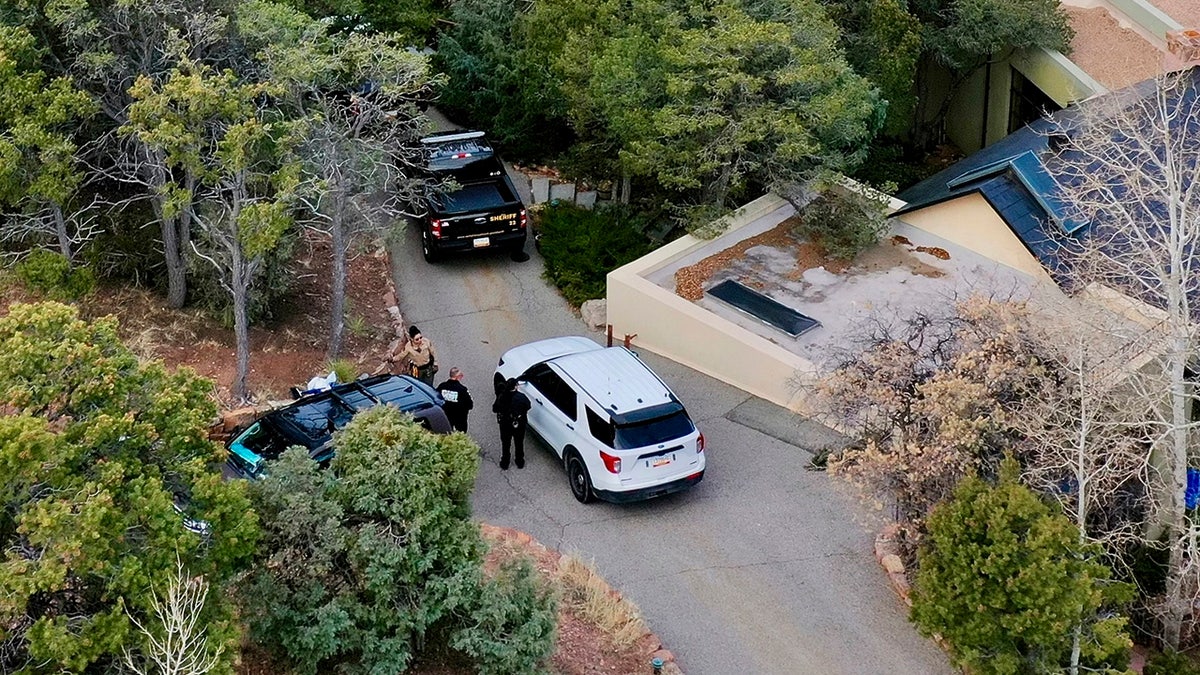
Law enforcement officials talk outside the home of actor Gene Hackman on Feb. 27 in Santa Fe, New Mexico. Hackman, his wife Betsy Arakawa and one of their dogs were found dead in the home a day earlier. (AP Photo/Roberto Rosales)
Authorities ruled out carbon monoxide poisoning as a factor in the deaths of Gene Hackman and Betsy Arakawa, Sheriff Adan Mendoza confirmed last week. Their Santa Fe residence was thoroughly tested for the odorless, colorless gas by the Santa Fe City Fire Department, which found no evidence of a carbon monoxide leak.
Additionally, the New Mexico Gas Company conducted an extensive investigation on Tuesday and reported "no significant findings" related to gas leaks or carbon monoxide exposure at the couple’s secluded home.
However, a minor gas leak was detected at one of the stove burners, measured at 0.33% gas in the air—a level far below lethal exposure limits. According to a release obtained by Fox News Digital, the investigation also uncovered four code enforcement violations, including issues with a water heater and gas log lighters installed in three fireplaces.
While these findings did not indicate an immediate danger, officials continue to analyze environmental factors that may have contributed to the circumstances surrounding their deaths.
Sheriff Adan Mendoza confirmed that the last recorded activity on Gene Hackman’s pacemaker occurred on February 17, leading authorities to believe this was the day he passed away. The Oscar-winning actor’s body remained undiscovered for nine days until maintenance workers found him on February 26.
"According to the pathologist, I think that is a very good assumption that February 17 was his last day of life," Mendoza stated.
Investigators continue to analyze Hackman’s medical records, pacemaker data, and autopsy findings to confirm the exact timeline of events leading to his passing. The New Mexico Office of the Medical Investigator is also reviewing toxicology reports and environmental conditions at the couple’s Santa Fe residence to rule out any additional contributing factors.