
Iran's supreme leader rejects nuclear talks with US after Trump's overtures
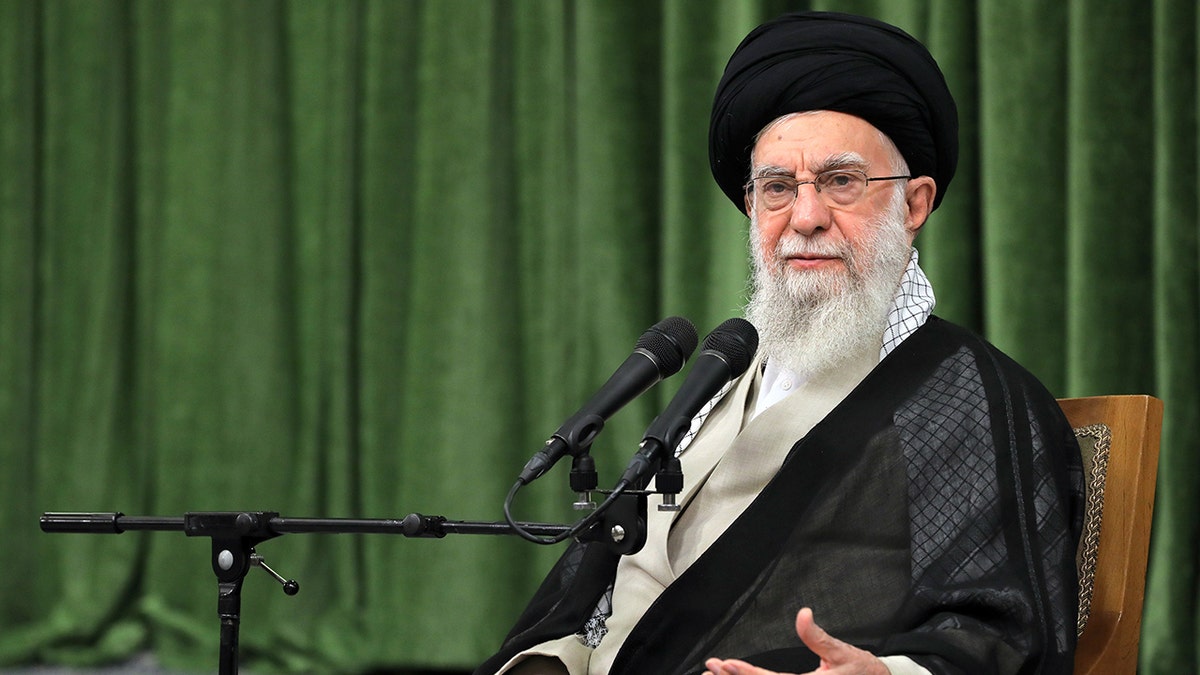
Iran's Supreme Leader Ayatollah Ali Khamenei speaks during a meeting in Tehran, Iran, July 7, 2024. (Iranian Leader Press Office/Handout/Anadolu via Getty Images)
TRUMP RESTORES 'MAXIMUM PRESSURE' CAMPAIGN AGAINST IRAN
"Telling us not to do this, not to meet that individual, not to go there, not to make this, and to restrict the range of our missiles to a certain extent," Khamenei wrote. "How could anyone accept such things?"
Khamenei tweeted one day after President Donald Trump mentioned that he had written a letter to Khamenei pressuring a nuclear deal with Tehran, implying there would be military action if a deal is not produced.
Trump reported to reporters Friday that the U.S. is "down to the final moments" of negotiations with Iran, and he hoped a military option would not be needed.
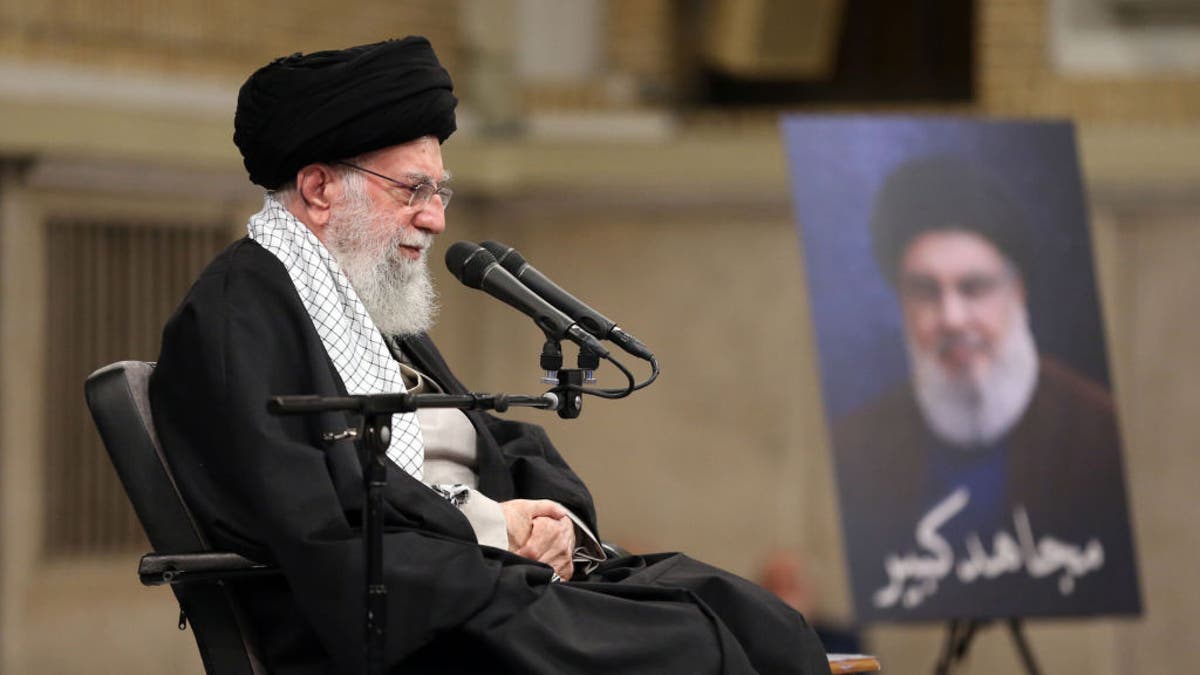
Iran Supreme Leader Ayatollah Ali Khamenei delivers a speech during a program held after the killing of Hezbollah leader Hassan Nasrallah Oct. 2, 2024. (Iranian Leader Press Office/Handout/Anadolu via Getty Images)
TRUMP'S NEW HIRINGS, FIRINGS ANGER IRAN HAWKS AS NEW PRESIDENT IMPLIES NUCLEAR DEAL
Responding in a statement Saturday, National Security Council spokesman Brian Hughes said the administration is hoping Iran "puts its people and best interests ahead of terror."
"President Trump said it clearly that there are two ways Iran can be handled: militarily or by making a deal," Hughes wrote.
Behnam Ben Taleblu, director of the Foundation for Defense of Democracies' Iran program, authored in a statement that Trump needs to "be careful" when negotiating with Tehran.
"Tehran has laid a trap for him, hoping to entice him into endless diplomacy which is employed to defuse maximum pressure and reduce the credibility of an American or Israeli military option while gaining time to edge towards a nuclear weapon," Ben Taleblu wrote in a statement.
While Trump, last month in February, had said he felt Iran was "close" to building a nuclear weapon, he added the U.S. would stop the action.
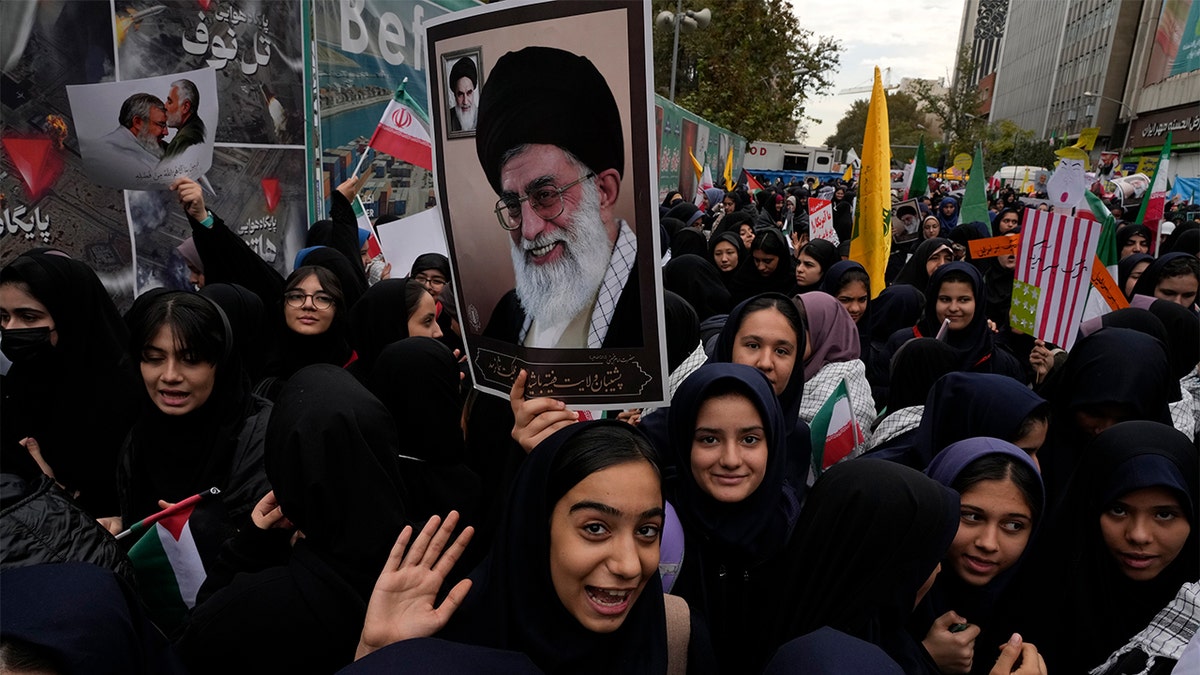
Iranian students attend an annual rally in front of the former U.S. Embassy in Tehran, Iran, Nov. 3, 2024, marking the 45th anniversary of Iranian students' takeover of the embassy. (AP Photo/Vahid Salemi)
IRAN'S SANCTIONED STRONGER ECONOMY COULD MEAN IT GOES FOR NUCLEAR ARMS, WARNS BIDEN NATIONAL SECURITY ADVISOR
He signed an executive measure directing the Treasury Department to impose "maximum economic pressure" on Iran by enforcing a series of sanctions that would decimate Iran's oil sales.
The "maximum pressure" campaign against Tehran, which went into effect with the first Trump administration, places higher sanctions and tougher enforcement penalties for non-compliance.
The president's remarks and the follow-up messages by Khamenei happened days before Sunday's 18th anniversary of the kidnapping of retired FBI Special Agent Robert "Bob" Levinson from Iran's Kish Island.
FBI Washington Field posted on Facebook Friday, declaring it "remembers Bob and his family every day" leading up to the anniversary and National Hostage and Wrongful Detainee Day.
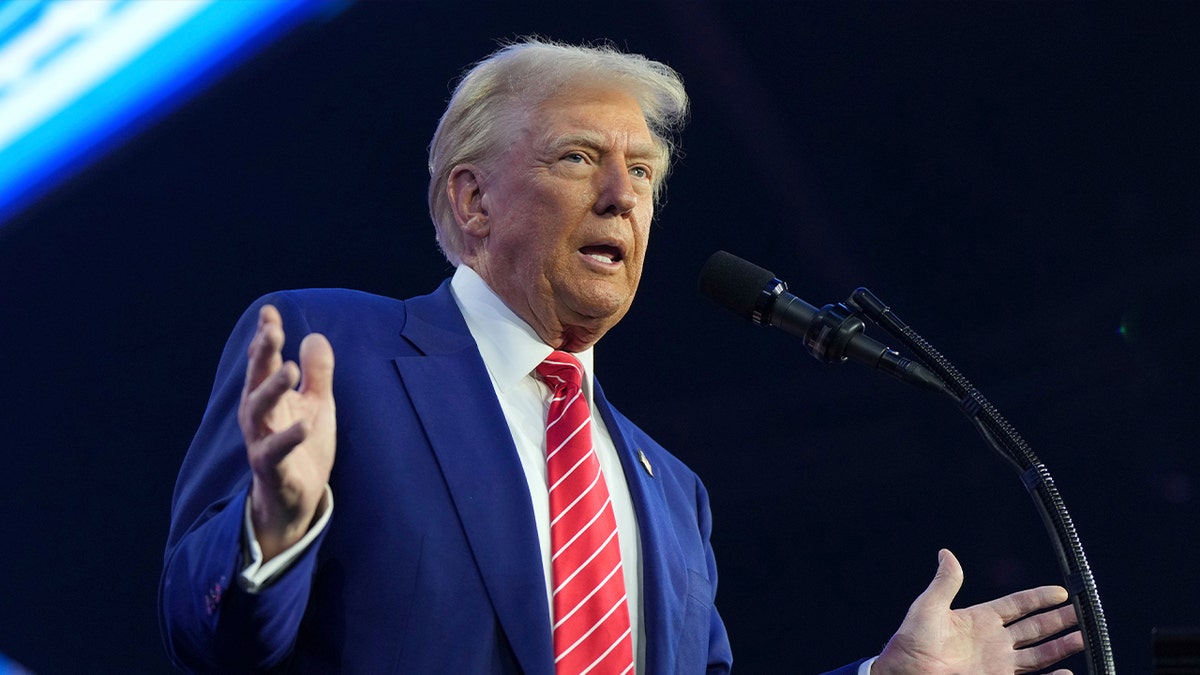
President Trump at AmericaFest in Arizona. (Rick Scuteri)
The FBI continues to provide a reward of up to $5 million for information leading to Levinson's whereabouts, recovery and return, the post states.
The Rewards for Justice program of the State Department is providing a reward of up to $20 million for information leading to his whereabouts, recovery and return and information leading to the arrest or conviction of anyone involved in his alleged kidnapping.
"A continuation of our campaign to bring justice to Bob and hold the regime accountable for what happened to him, we published recently seeking information posters for Mohammad Baseri and Ahmad Khazai, two high-ranking Iranian intelligence agents who were then employed by the Ministry of Intelligence and Security in Iran when they kidnapped Bob," the agency published in the article.